

Finding the right school in the growing Helderberg can be difficult. I visited The Honeybush Collective in Somerset West to explore its multigrade approach and why families are choosing it.
The Helderberg has changed considerably over the past few years. More families are moving into the area, established communities are expanding, and finding a suitable school has become one of the practical questions families have to navigate.
The pressure is particularly noticeable when families start looking beyond the obvious options. Established public schools can have limited space, private schools can be expensive, and alongside them is a growing collection of smaller independent and cottage-style schooling options. For parents, the question is not simply whether a school has space, but whether it is properly registered, whether its approach suits their child, and whether the environment is one in which that child is actually going to be happy.
That was what I wanted to understand when I visited The Honeybush Collective in Somerset West.
I had previously written about the small primary school ahead of its Spring Market and Open Day, chatting with principal Fran Denton about the school and its approach to education. This time, I visited the school itself and spoke to parents, teachers and its founder. The conversations offered a much clearer picture of why some families are choosing it.
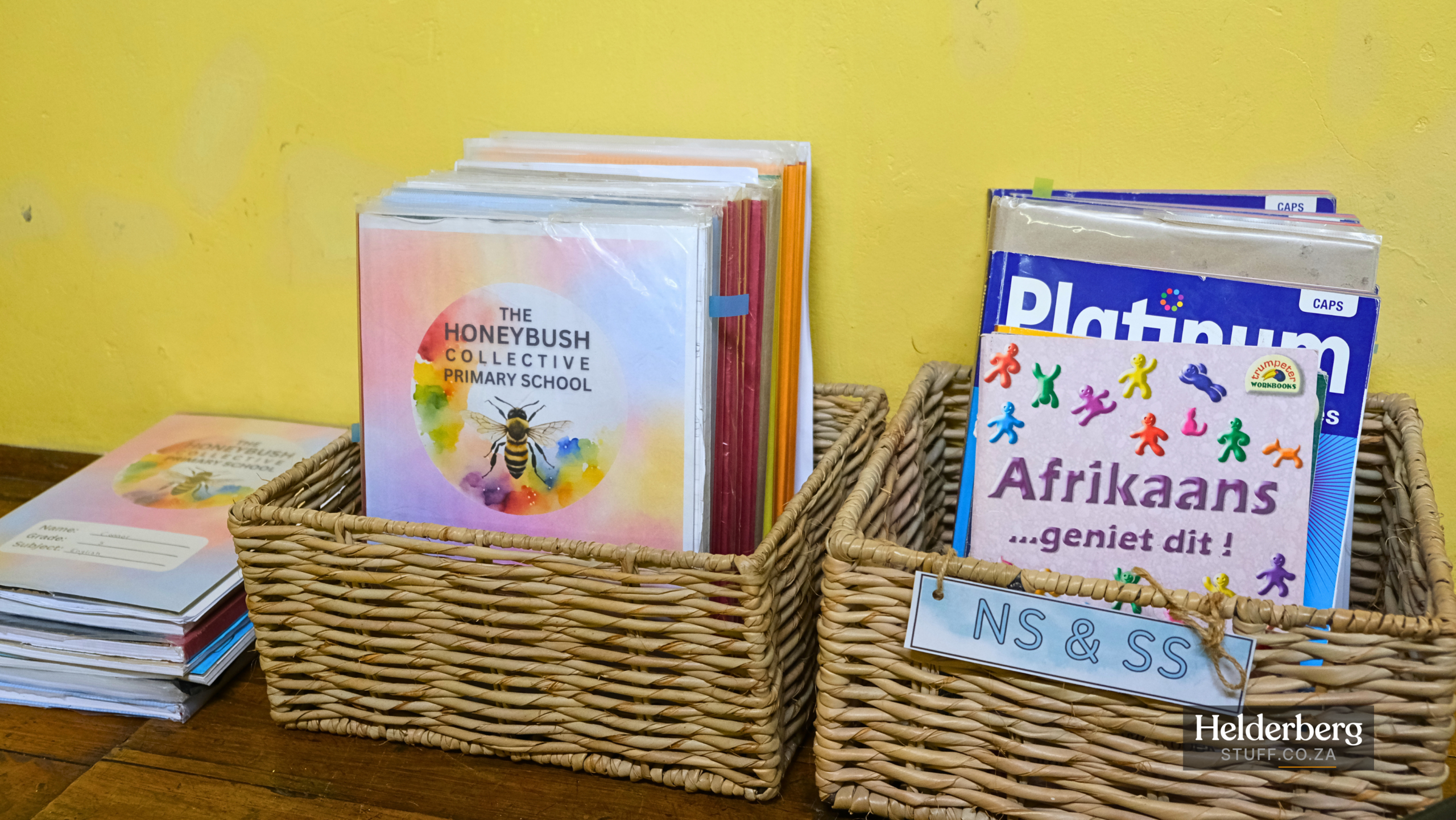
The Honeybush Collective is a small, independent primary school at 111 Drama Street in Somerset West, offering a multigrade approach for children from Grade 1 to Grade 7. It is registered with the Western Cape Education Department and follows the CAPS curriculum, while combining conventional academic work with a more flexible and creative learning environment.
What became clear from the conversations I had was that the school is not simply an argument against mainstream education. It is an argument for recognising that children are different, and that the environment in which one child flourishes may not necessarily work for another.
A school born from one parent’s search
For founder Fran Denton, the story started with her own daughter.
Her daughter had attended Stellenbosch Waldorf School for playgroup, kindergarten and Grade 1, and Denton had also served on its board of trustees for three and a half years. When the school faced the possibility of closure, she began looking at alternatives.
She visited a number of schools, including Newberry and Helderberg International, but found herself caught between two things she wanted for her daughter. She did not want a large mainstream school, but she also did not want to put her into an unregistered school.
That distinction matters to Denton.
She pointed out that there are a number of smaller schooling operations around Somerset West, but parents do not always know whether these are properly registered with the Western Cape Education Department. Her advice is simple: parents should check. A registered school should have the relevant WCED and EMIS details.
For Denton, however, registration was only one part of the equation.
She wanted something small, nurturing and personal. She wanted to protect her daughter from the pressure of competition, bullying and peer pressure, while still giving her a proper education.
“Life is hard as it is. It shouldn’t be hard when you’re seven years old,” she told me.
That eventually led to a fairly significant decision: if she could not find the school she wanted for her daughter, she would create it herself.
The multigrade classroom
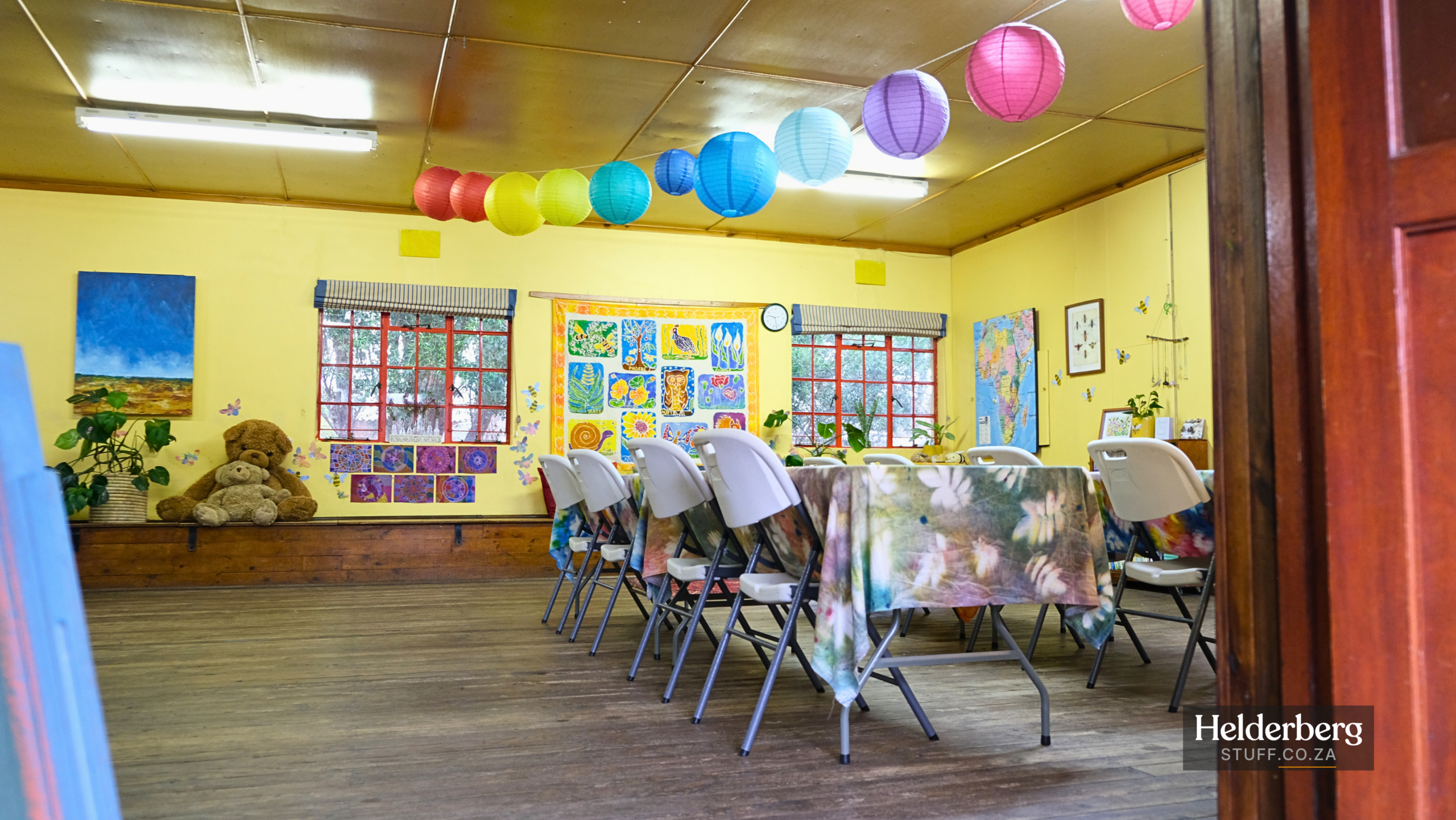
One of the most obvious differences at Honeybush is the multigrade classroom.
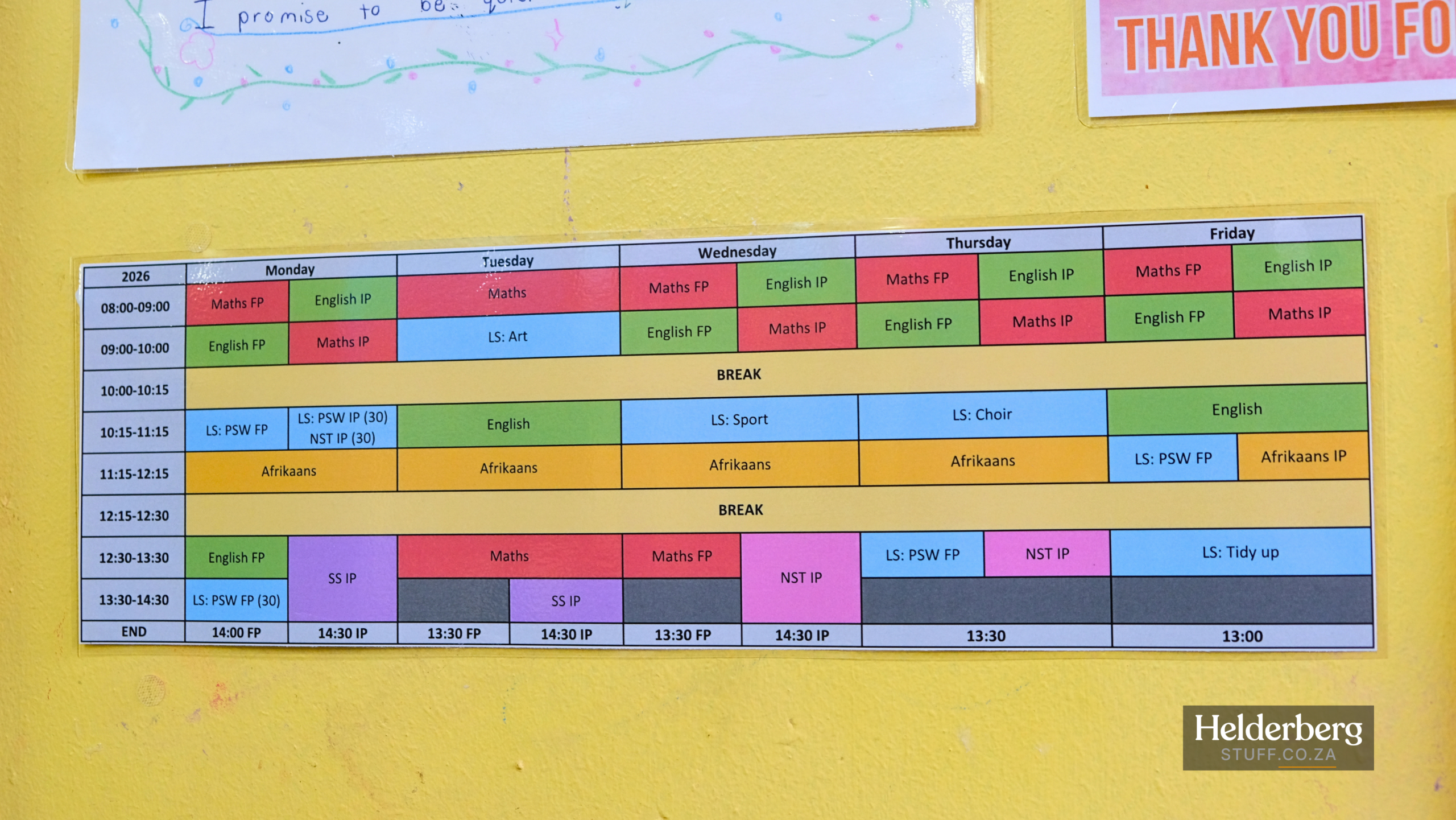
Rather than dividing children strictly according to age, children from different grades learn within the same broader environment. That does not mean every child is doing the same work all day. There are breakaway groups, individual work and joint activities, depending on what is being taught, explained Caitlin Labuschagne, one of the teachers at The Honeybush Collective.
There is also an element of children learning from one another. Older children can assist younger ones, while younger children have older pupils around them who provide examples of what they can eventually do themselves.
I also spoke to parents whose son moved to Honeybush. They said the change was noticeable almost immediately, with their child now much happier in his school environment.
For both parents, the multigrade approach has also worked in an unexpected way. Their son, they said, is encouraged by seeing older children working around him, while the older pupils have opportunities to help younger children.
His father described it as giving children an impetus to grow. The parents compared it to the way older and younger siblings can influence one another. A child sees something an older pupil is doing and starts thinking, “I can also do this.”
They also felt that the system could work in both directions. Their son is naturally inclined to be comfortable doing the minimum, while their daughter is more academically inclined and may benefit from being challenged beyond the standard expectations of her grade. In a multigrade environment, they said, there is greater scope to accommodate both.
But they were equally clear that schooling is personal. What works for one child may not work for another, and they did not see Honeybush as necessarily being the right environment for every child.
Happy children still have structure
That point came through repeatedly in my conversations.
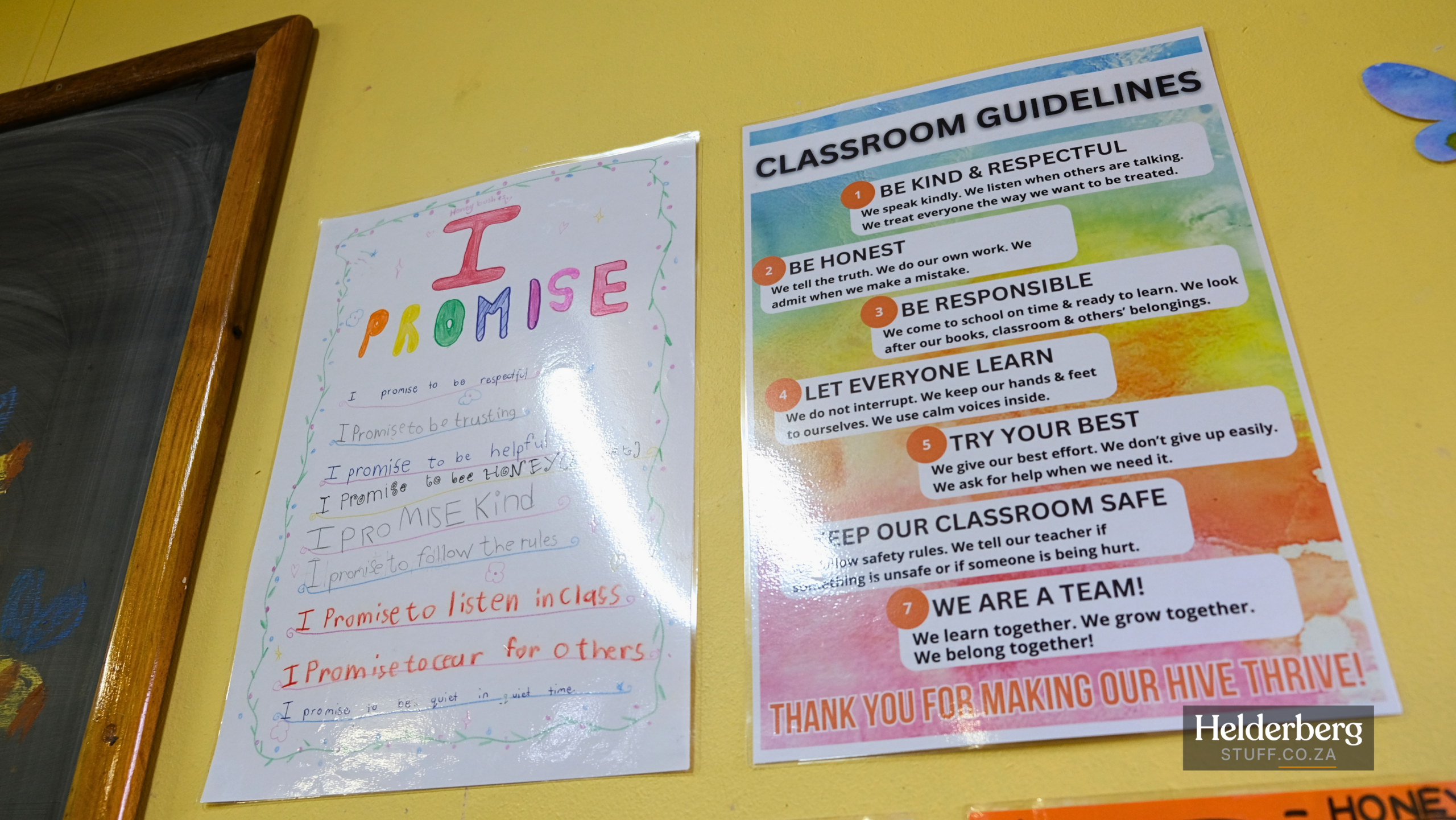
The idea of a small, creative school can easily be misunderstood as one where children simply have more freedom to do whatever they want. Denton is clear that this is not what Honeybush is trying to create.
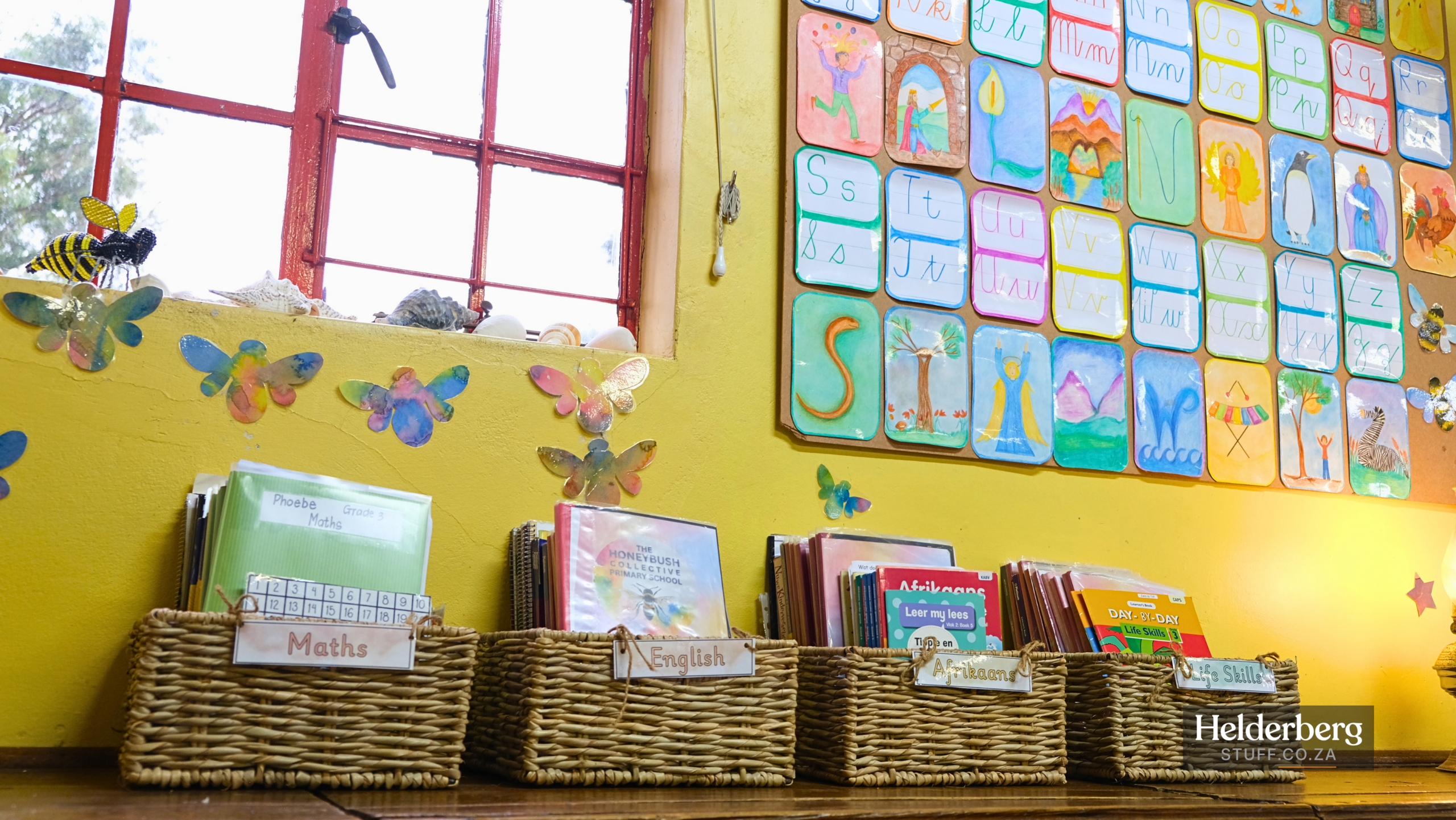
The school follows CAPS. There are assessments, moderation and reports at the end of every term, giving parents a clear indication of where their children are academically.
The difference is in how that structure is delivered.
There is a routine, but there is also flexibility to respond to what the children need on a particular day. That might mean taking a break outside when they need to reset, or sitting down to read a story when the class needs to slow things down. The structure is there, but it is flexible enough to accommodate the children rather than expecting the children to fit rigidly into it.
For Denton, that balance is important because children need both predictability and flexibility.
She also wants parents to know that Honeybush takes the formal side of running a school seriously. Establishing the school was a lengthy process involving policies, zoning, health and fire requirements and the various requirements of the education authorities.
The school operates from the 2nd Somerset West Scout Hall, which means everything has to be packed away every Friday and set up again on Monday.
Denton laughed when she described it. The school has become so efficient at the process that the entire operation now takes around 30 minutes each way.
It is an unusual arrangement, but one that gives the school a properly zoned and accessible home in the centre of Somerset West.
What happens when children have different learning needs?
Another question that naturally arises when looking at a small school is how it accommodates children who may have different learning needs.
Denton’s answer is that there is no blanket answer.
Honeybush considers each child individually, looking at whether it can genuinely accommodate that child’s needs while maintaining the learning environment for the rest of the class.
Prospective learners are required to spend at least three days at the school before a final decision is made. That gives the child an opportunity to experience the environment and allows the teachers to assess whether the school can provide what the child needs.
There is also an important practical consideration in a multigrade environment: children need a degree of independence because a teacher cannot provide one-on-one attention throughout the day.
Denton said the school would rather be honest with a parent if there are gaps it cannot currently fill, potentially recommending additional support or tutoring before the child joins.
That approach is perhaps less convenient than simply accepting every child who applies, but it is also more responsible.
Why some parents are making the switch
The parent conversations brought the issue back to where it started: the child.
Another parent told me that her daughter had previously been homeschooled before moving to Honeybush. She had already been a creative child, but after starting at the school, that creativity seemed to explode.
Her daughter now comes home and continues creating, experimenting and engaging with things she has encountered during the school day.
“She’s happy,” her mother said.
That happiness was a recurring theme.
It also helps explain why the school is attracting families who are not necessarily looking for an alternative education system because they reject conventional schooling. Some are simply looking for a better fit for a particular child.
A different option in a growing community
That, ultimately, is where Honeybush fits into the broader Helderberg schooling conversation.
The area does not need every family to choose the same type of school. It needs parents to know what their options are, and to have enough information to distinguish between them.
There will always be parents who want the established school, the sporting tradition, the large campus and the familiar structure. There will also be children who thrive in precisely that environment.
But there are other children for whom a smaller setting, closer attention, mixed-age learning and a less pressured atmosphere may make a considerable difference.
Honeybush is deliberately positioned in that space.
It is small by design, with a maximum of 20 children, and its multigrade model is central to the way the school operates. It combines that with the CAPS curriculum and formal academic assessment, while trying to preserve what Denton describes as a warm, nurturing environment in which children are seen as individuals.
Whether that is the right answer for a particular family is something parents will have to decide for themselves.
But in a Helderberg where families are growing, school choices are becoming more consequential, and parents are increasingly having to look beyond the traditional options, The Honeybush Collective is another name worth knowing.
And perhaps the most useful thing I took away from my visit was not an argument that one model of schooling is better than another.
It was something considerably simpler: the right school may depend less on what works for everyone else, and more on what works for your child.